
The Space Between Things
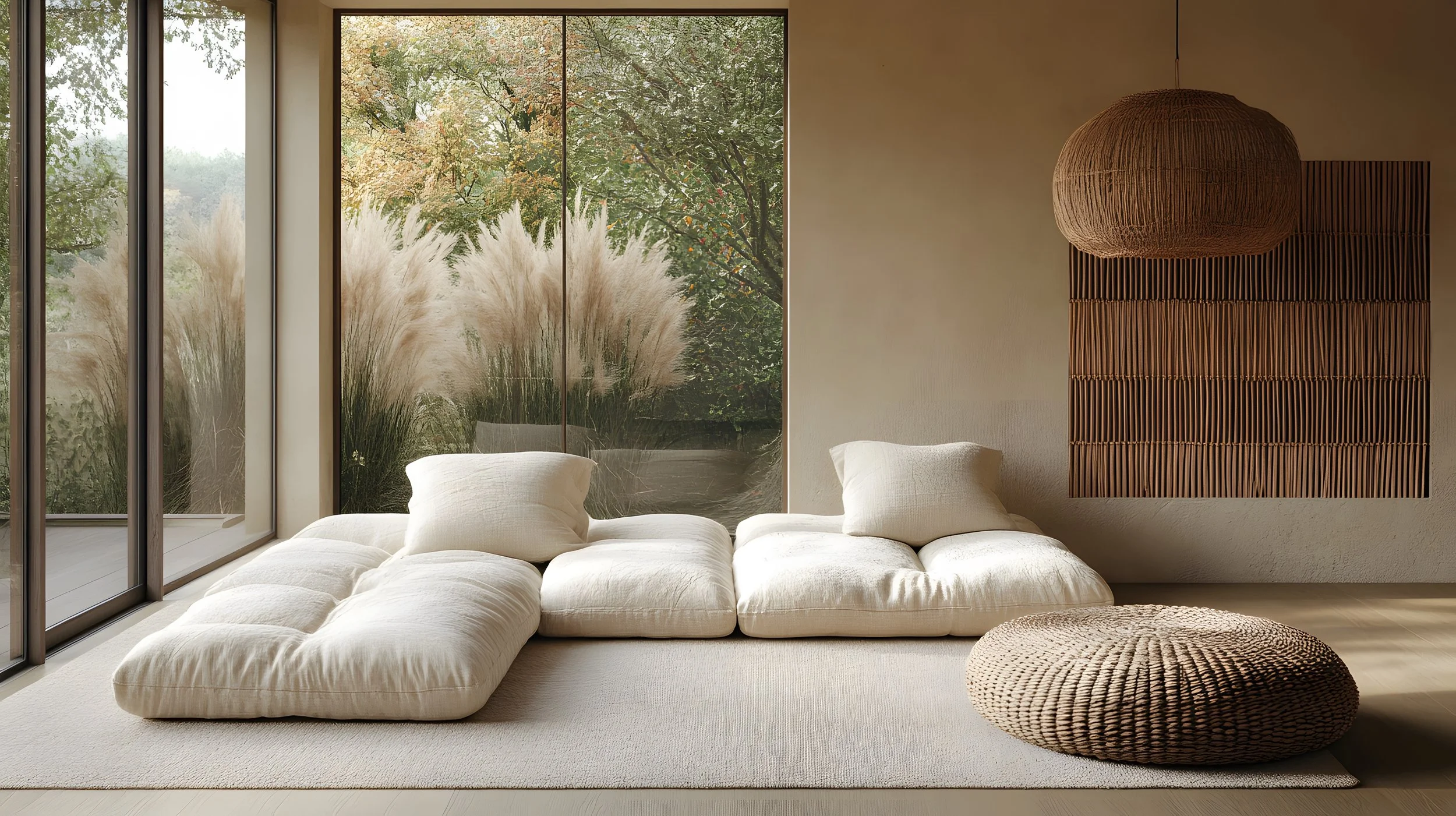
There’s a moment that happens when you walk into a well-designed space.
Not the kind that’s styled for a photo, or filled with expensive furniture, but something quieter. You feel it before you notice anything specific. Nothing is shouting for your attention, and yet everything feels considered. That feeling doesn’t come from what’s there. It comes from what isn’t.
In Japan, there’s a concept called 間 (ma)—often translated as “space,” but that barely scratches the surface. It’s the pause between things. The intentional emptiness that gives shape to everything around it. Without it, even the most beautiful objects start to feel heavy. This is where a lot of people get interior design wrong.
When moving into a new home, especially in cities like Tokyo where space is limited, the instinct is to solve. You need storage, seating, surfaces. You start filling gaps as quickly as you notice them. A shelf here, a cabinet there, maybe one more piece just to make the room feel “complete.” But completeness is often the problem.
A room that tries to do everything at once ends up doing nothing well. It becomes visually loud, even if the palette is neutral. You can feel it in your body—your eyes don’t know where to rest. Good design isn’t about adding. It’s about editing.
It’s choosing to leave a corner empty, even when you could put something there. It’s allowing your dining table to breathe instead of treating it like a display surface. It’s resisting the urge to push every piece of furniture against a wall just because that’s what feels “efficient.”
This becomes even more important in Japan, where homes often come with constraints—smaller rooms, awkward layouts, limited storage. These limitations can feel frustrating at first, especially if you’re used to more space. But they also force a different way of thinking.
Instead of asking, “How do I fit everything in here?” The better question becomes, “What actually needs to be here at all?” That shift changes everything.
When you start designing with intention instead of accumulation, the space begins to work with you instead of against you. Movement becomes easier. Cleaning becomes simpler. Even your daily routines start to feel more fluid, because the environment isn’t constantly asking something from you.
This is the part people don’t talk about enough: interior design isn’t just visual. It’s behavioral.
The way your home is arranged quietly dictates how you live in it. A cluttered entryway slows you down every time you leave. A crowded kitchen makes cooking feel like a chore. A bedroom filled with visual noise makes it harder to actually rest. On the other hand, when there’s space—real, intentional space—everything feels a little lighter.
You don’t need to adopt a stereotypical “Japanese aesthetic” to get there. It’s not about tatami mats or neutral colors or minimalism for the sake of it. It’s about understanding the philosophy behind it. Space isn’t empty. It’s active. It frames your objects. It gives your routines room to exist. It creates a sense of calm that no amount of styling can replicate.
So the next time you feel like your home is missing something, it might not be another piece of furniture. It might be less.