
Anyone who has spent even a short time apartment hunting in Tokyo quickly learns an important truth: square footage rarely tells the whole story.
A listing might say a room is 25 or even 30 square meters, which on paper doesn’t sound terribly small. But once you start imagining a bed, a sofa, a table, and storage, the space can suddenly feel much tighter than expected. For many people moving to Tokyo—especially those coming from countries where homes are designed around larger furniture—this realization often arrives the moment they try to visualize fitting their belongings into a typical Japanese layout.
The good news is that small apartments in Tokyo don’t have to feel cramped. In fact, when designed thoughtfully, they can feel surprisingly open, calm, and functional. The difference almost always comes down to how the space is planned, furnished, and organized.
Understanding the Unique Constraints of Tokyo Homes
One of the main reasons apartments in Tokyo can feel smaller than their advertised size is that many are designed around very specific spatial assumptions. Bedrooms are often compact and proportioned for single or semi-double beds. Storage may be minimal. Living rooms can be narrow rather than square. Kitchens are often built along one wall rather than occupying a separate room.
These layouts are not inherently bad—they simply require a different approach to living. When furniture is scaled appropriately and the space is organized with intention, even a modest apartment can feel comfortable and elegant.
In fact, small spaces have one major advantage: they force clarity. Every piece of furniture and every design choice has to earn its place.
Furniture Scale Matters More Than You Think
One of the most common mistakes people make when furnishing a Tokyo apartment is choosing furniture that is simply too large for the room.
A deep Western-style sofa, a large dining table, or a bulky bed frame can quickly overwhelm a space that was designed with more compact furniture in mind. When oversized pieces dominate a room, circulation becomes difficult and the space begins to feel cluttered—even if there aren’t many items present.
Opting for furniture with lighter proportions can make an enormous difference. Sofas with slimmer arms, dining tables with narrower profiles, and beds with minimal frames help maintain a sense of openness. Pieces with exposed legs also visually lighten a room, allowing the eye to move freely across the floor.
The goal is not to make the apartment feel empty, but to ensure the scale of each object works in harmony with the architecture of the space.
Vertical Space Is Your Greatest Asset
While floor space in Tokyo apartments may be limited, vertical space is often underutilized.
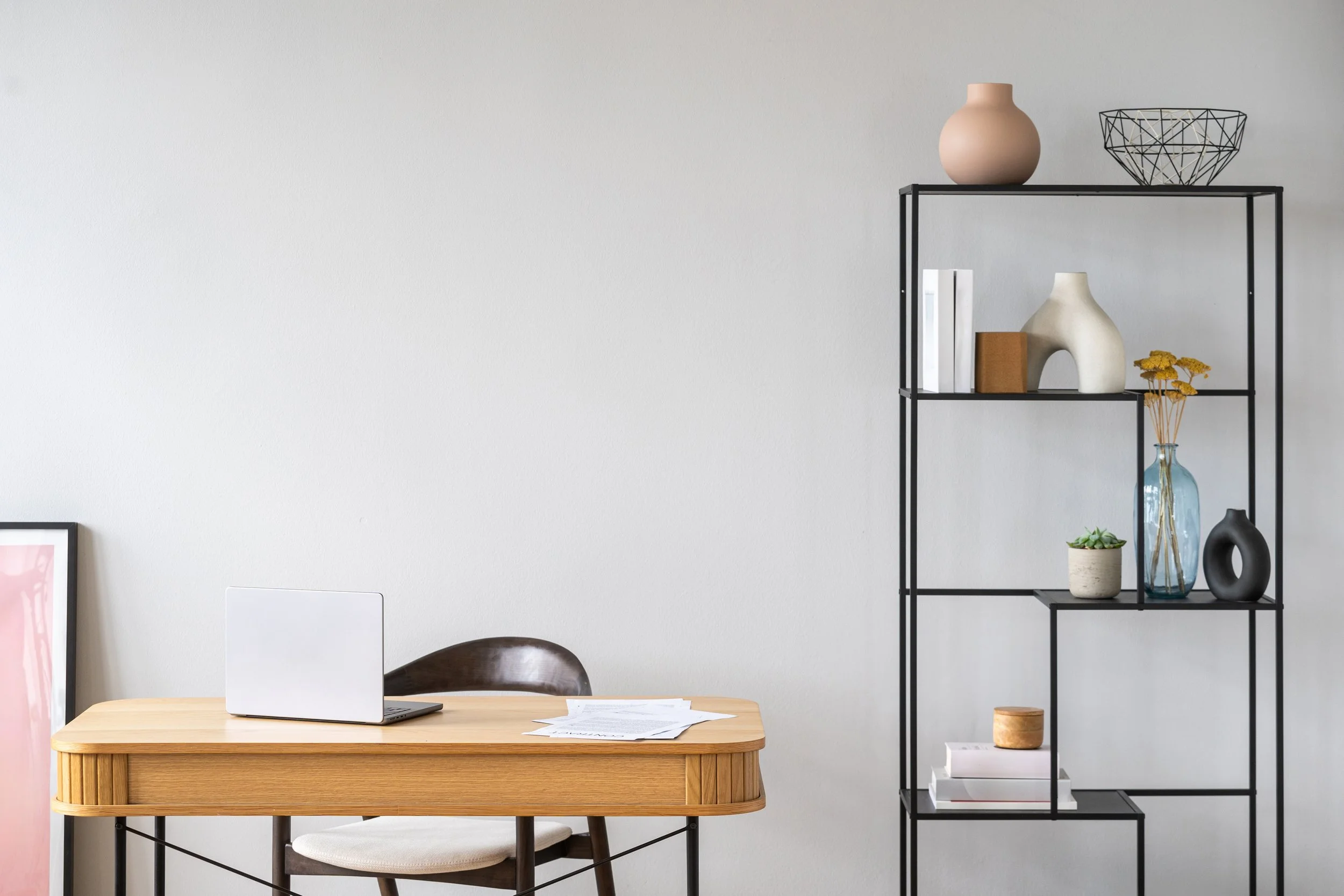
Walls provide valuable opportunities for storage, display, and organization. Shelving or tall bookcases can dramatically increase storage capacity without taking up additional floor area. Even small additions—such as hooks or rails—can help keep everyday items organized and off surfaces.
Using the full height of the room also draws the eye upward, which subtly makes a space feel taller and more expansive. When everything sits low to the ground, the room can feel compressed. Introducing height through shelving, plants, or artwork helps balance the proportions.
Layout Is More Important Than Decoration
When working with a small apartment, layout decisions have a far greater impact than decorative details.
Simply shifting the placement of a sofa or table can completely change how a room functions. Ideally, furniture should support natural movement through the space rather than interrupting it. Clear pathways allow a room to breathe and make daily life more comfortable.
In many Tokyo apartments, the most effective layouts also serve multiple purposes. A dining table might double as a workspace. A bench might offer hidden storage. A low console might function as both media storage and room divider.
Designing a small space is less about filling it and more about allowing it to work intelligently.
Storage Should Be Invisible Whenever Possible
Clutter is the fastest way to make a small apartment feel smaller.
Thoughtful storage solutions help maintain visual calm and prevent everyday items from accumulating in plain sight. Closed storage—such as cabinets, drawers, and storage benches—keeps the environment feeling clean and intentional.
Even small habits, such as creating a designated place for bags, coats, and daily essentials near the entrance, can dramatically improve how organized a home feels.
In a compact apartment, organization is not just about tidiness—it’s an essential part of the design.
Light and Simplicity Create Breathing Room
Lighting also plays a surprisingly large role in how spacious an apartment feels.
Many Tokyo homes rely on a single ceiling light, which can make the room feel flat and smaller than it actually is. Introducing multiple light sources—such as floor lamps or table lamps—creates depth and warmth, allowing different areas of the room to feel defined and inviting.
Similarly, a restrained color palette helps maintain a sense of openness. Neutral tones, natural materials, and simple textures allow the architecture and furniture to coexist without visual noise.
The goal is not minimalism for its own sake, but clarity.
Small Spaces Reward Thoughtful Design
Living in a compact apartment often requires a shift in perspective. Instead of trying to replicate the layouts and furniture choices of larger homes, the most successful interiors embrace the strengths of the space they’re in.
Tokyo apartments may be smaller, but they also encourage intentional living. When furniture is chosen carefully, storage is planned thoughtfully, and layouts are designed with purpose, even a modest home can feel calm, comfortable, and surprisingly spacious.
Small spaces, when designed well, don’t feel limiting at all. In many ways, they feel just right.
If you’re navigating the challenges of furnishing or organizing a Tokyo apartment, thoughtful design can make all the difference. I work with clients to plan layouts, select furniture, and create spaces that feel both functional and beautiful—even within the constraints of smaller homes. Don’t hesitate to reach out!